
Supplier Registration Form
ISO 9001:2015 Certificate number: IT331780

The research has been published in the 'Journal of Translational Medicine' and involved as main contributors two young researchers, Marco Bocchetti and Alessia Maria Cossu, from the Biogem's Molecular and Precision Oncology Laboratory, led by Professor Michele Caraglia, as well as Dr. Amalia Luce and Professor Silvia Zappavigna, both from the University of Campania 'Luigi Vanvitelli'. The main result of the collaboration between the two institutes was the identification of a microRNA (miR-423-5p) capable of acting as a tumor suppressor in hepatocellular carcinoma (HCC) and, at the same time, influencing key metabolic pathways, reducing the activity of oncogenic proteins.
"In the fight against cancer," explains Dr. Marco Bocchetti, "we have long focused on identifying diagnostic and prognostic biomarkers in HCC, as this tumor still lacks sensitive and specific predictive markers, despite therapeutic advances. MicroRNAs are therefore emerging as promising tools both for classifying patients and monitoring therapies, and as targets capable of modulating the tumor microenvironment and overcoming treatment resistance." "Our study," explains Dr. Cossu, "deeper explored the role of miR-423-5p, analyzing its effects on the growth and progression of HCC cells through an integrative approach combining quantitative proteomics, bioinformatics predictions, and experimental validation." "Thanks to our collaboration with the John van Geest Cancer Research Centre at Nottingham Trent University," adds Marco Bocchetti, "we observed that miR-423-5p can act as a powerful brake on tumor growth." We also confirmed that "this microRNA regulates several oncogenic factors and functions as a true 'metabolic regulator' of tumor cells, paving the way for new targeted therapeutic strategies."
"The results of our work," confirms Dr. Cossu, "suggest that analyzing miR-423-5p levels could help identify at-risk patients and monitor therapies. It is also a potential target for new treatments targeting tumor cell metabolism. Future studies, particularly on animal models and human patients, will therefore be crucial for transforming these discoveries into concrete solutions against hepatocellular carcinoma."
Professor Michele Caraglia, co-senior author of the study, agrees with this view, and he is confident that these results "have taken another step forward in understanding the molecular mechanisms driving hepatocellular carcinoma." "The integration of proteomic, bioinformatic, and clinical approaches in this study," Caraglia concludes, "confirms our laboratory's commitment to research focused on preclinical findings, enabling, in this case, the discovery of new tools for early diagnosis and personalized treatment of patients with HCC."
The research, developed by the Cellular Biology and Preclinical Oncology group of the Italian Institute, coordinated by Professor Geppino Falco, focused on the role of a protein called HUNK (acronym for Hormonally Upregulated Neu-associated Kinase) in the progression of stomach cancer, one of the most widespread and deadly forms of neoplasia worldwide. In particular, Biogem researchers discovered that this biomarker acts by promoting the multiplication of tumor cells and their survival, regulating important cellular processes related to division and response to stress. The study, published in the journal Cell Communication and Signaling, also highlighted that HUNK contributes to increasing the levels of a protein called MUC16, better known as CA-125.
<<It is – explains Professor Geppino Falco – an already known marker, mainly used to monitor different types of tumors, such as ovarian cancer, but more and more studies indicate its involvement also in gastric cancer>>. <<These results – emphasizes Dr. Pellegrino Mazzone, one of the co-authors of the research – are important because they shed light on a new molecular mechanism involved in the progression of stomach cancer and, at the same time, open the way to possible targeted therapies, capable of acting specifically on HUNK, blocking the tumor growth>>.
<<In a not too distant future – echoes Dr. Giuseppina di Paola – HUNK could become a therapeutic target for innovative drugs, with the aim of making treatments more effective and personalized, reducing side effects and increasing the chances of survival for patients>>.
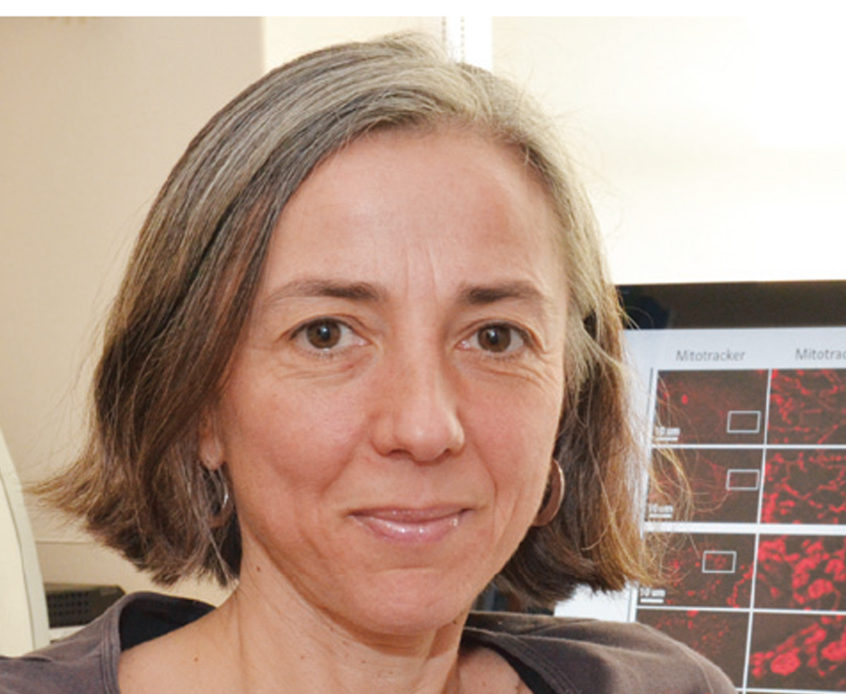
On Monday 12 May, at 12:00, the Biogem will host Antonella Spinazzola, Professor of Mitochondrial Medicine and Neuroscience at University College London and an international leading figure in the study of mitochondrial DNA. Originally from Melito Irpino, Spinazzola will present her research on genetic diseases linked to the dysfunction of mitochondria, organelles essential for the production of energy in cells. Her studies have resulted in the identification of the genetic causes and pathogenic mechanisms of several rare genetic diseases. Results that made possible the development of therapeutic strategies for two groups of mitochondrial DNA diseases, also validated in preclinical models.
The seminar, open to the public and held in English to facilitate the attendance of several international researchers, will also present the first steps towards the clinical translation of these innovative therapies.
<<The goal of my research - explains Spinazzola - is understanding the role of mitochondria and their genome in human diseases, studying both rare genetic diseases and the most common neurometabolic disorders, with the aim of developing tailored therapies and innovative strategies that may be applied to a broad spectrum of clinical conditions>>.
<<This seminar - underlines the scientific director of Biogem, Giovambattista Capasso - is a valuable opportunity to delve into the most promising developments in the field of translational mitochondrial medicine and to know the work of an Italian scientist at the top of international research>>.

The research project, called Nutribrain and aimed at clarifying the impact of lifestyles on cognitive decline affecting a significant number of patients with chronic kidney disease, has been presented on Thursday 8 May at the Biogem Institute in Ariano Irpino. The one-day scientific meeting has involved researchers from different centers of the Old Continent (Poland, Lithuania, Holland, Switzerland, France and Italy), including Professor Carmine Zoccali (Biogem), the project’s leader.
<<This research project – says Professor Giovambattista Capasso, scientific director of Biogem – was approved and funded under the Horizon Europe 2020-2026 program, and it is the natural continuation of the pioneering four-year international network CONNECT, which is about the kidney-brain interaction (with Biogem at the forefront)>>. <<The goal of this research – adds Professor Capasso, also in his role as founder of the nephrology research area of Biogem – is to fill a serious gap in our medical knowledge. To date, in fact, there is no validated intervention to fight cognitive deterioration in patients with chronic kidney failure. The proposed study, lasting three years, and starting this month, will consist of a 26-week randomized clinical trial, with a 78-week post-experiment observation>>.
<<During the trial – adds Professor Zoccali – the effectiveness of a structured program of aerobic and resistance physical exercises on the levels of cognitive function in patients with advanced chronic kidney failure and dialysis patients with cognitive decline will be evaluated>>. <<The clinical study – underlines Zoccali– will be completed by the analysis of circulating and genetic biomarkers on samples collected from participating patients, stored in the newly created Biogem biobank, directed by Dr. Antonello Calcutta and equipped with all the most modern technology in the sector. Some patients will also undergo brain fMRI, analyzed at the Department of Neurology of the University of Campania Luigi Vanvitelli>>.
<<This research – underlines Professor Capasso – aims to finally open the way to non-pharmacological treatment for a disorder such as the reduction of cognitive capacity, currently without cures and seriously impacting the quality of life of affected patients>>. <<And the results obtained – Capasso himself finally bets – could be translated into the treatment of even more disabling pathologies, such as dementia>>.
Page 1 of 4
ISO 9001:2015 Certificate number: IT331780